Which is better: resin or block paving?
There is no single answer that suits every driveway. Resin bound surfacing is usually chosen for a clean, modern, low-maintenance finish, while block paving is chosen for a more traditional, detailed look with borders, patterns and individual blocks.
The best surface depends on your existing base, drainage, budget, property style and how the driveway will be used. A small front driveway, a sloped entrance, a large rural parking area and a smart modern home may all need different advice.
Quick comparison
- Choose resin for a smooth, modern, low-maintenance finish.
- Choose block paving for traditional detail, patterns and decorative borders.
- Choose resin overlay if your existing tarmac or concrete is sound and suitable.
- Choose block paving if you want easy individual block replacement later.
Need help choosing?
Send photos of your current driveway and we can advise whether resin, block paving or another driveway surface is most suitable.
Freephone: 0800 861 1678
WhatsApp: 07534 377 561
Resin vs block paving comparison table
| Feature | Resin Bound Driveway | Block Paving |
|---|---|---|
| Appearance | Smooth, modern, seamless stone finish | Traditional blocks, patterns and borders |
| Maintenance | Generally lower maintenance | Needs joint care, weed control and occasional re-sanding |
| Drainage | Can be permeable when installed on the right base | Can be permeable if designed as a permeable system |
| Repairs | Repairs can be more visible | Individual blocks can often be replaced |
| Best for | Modern homes, overlays, low-maintenance driveways | Traditional homes, decorative patterns, borders |
| Typical cost | Overlay can be cost-effective where suitable | Usually depends on block choice and groundwork |
Final suitability depends on survey, existing surface condition, drainage and preparation.
Resin driveways: pros and cons
Resin bound driveways are popular because they create a neat, smooth and modern finish. The surface is made by mixing decorative stone with resin and trowelling it onto a suitable base.
Resin is especially attractive where the existing tarmac or concrete is already sound enough for an overlay. In that situation, it can provide a major visual improvement without rebuilding the entire driveway.
Benefits of resin
- Smooth, contemporary appearance
- Wide range of natural stone colours
- Generally low maintenance
- No loose gravel when installed correctly
- Can be permeable with the correct system
- Can overlay suitable existing surfaces
Things to consider
- The base must be stable and suitable
- Repairs can be more noticeable than block replacement
- Poor installation can lead to cracking or loose stone
- Drainage must be planned properly
Learn more on our resin driveways page.
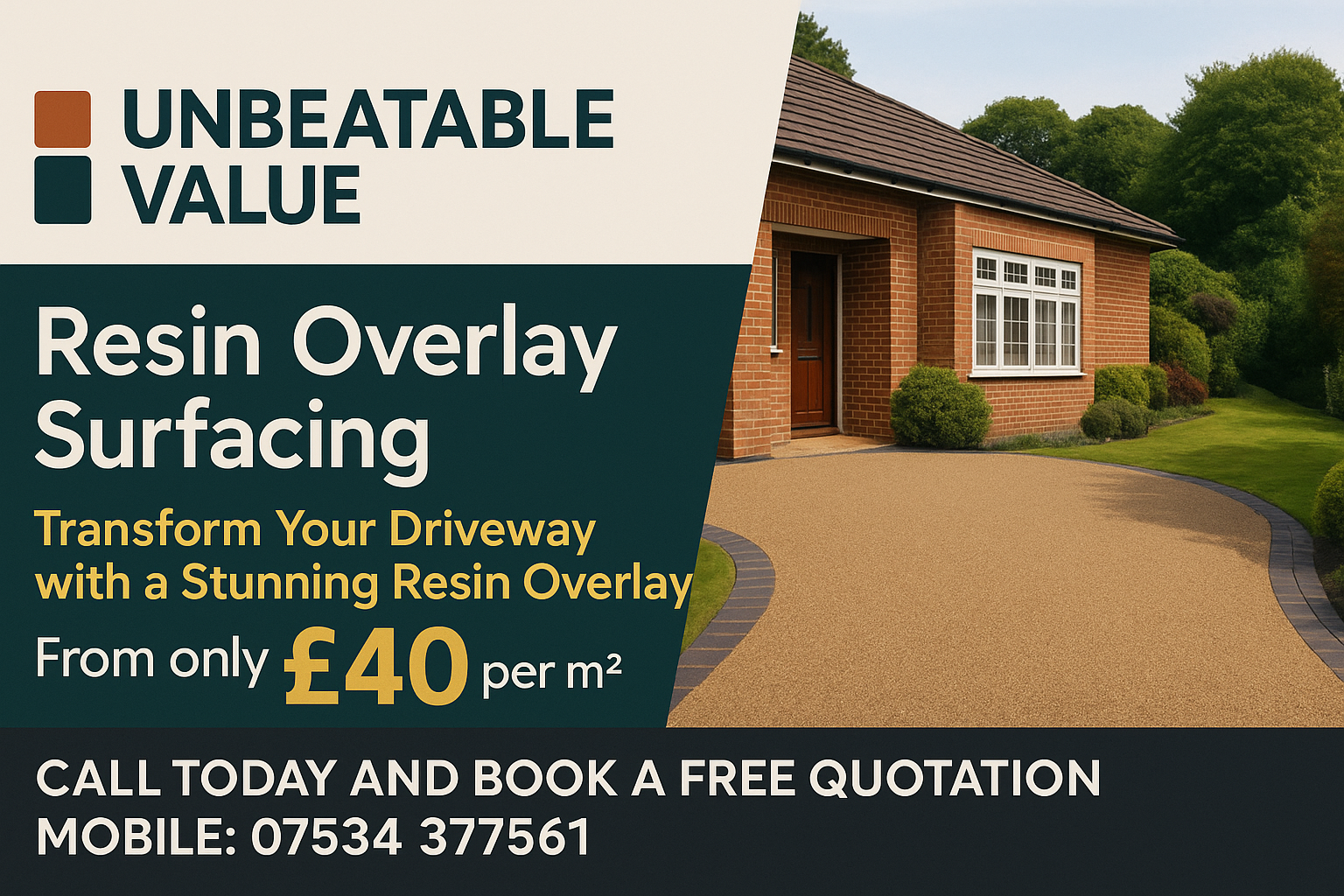
Resin is often chosen for a clean, modern finish and low-maintenance appearance.
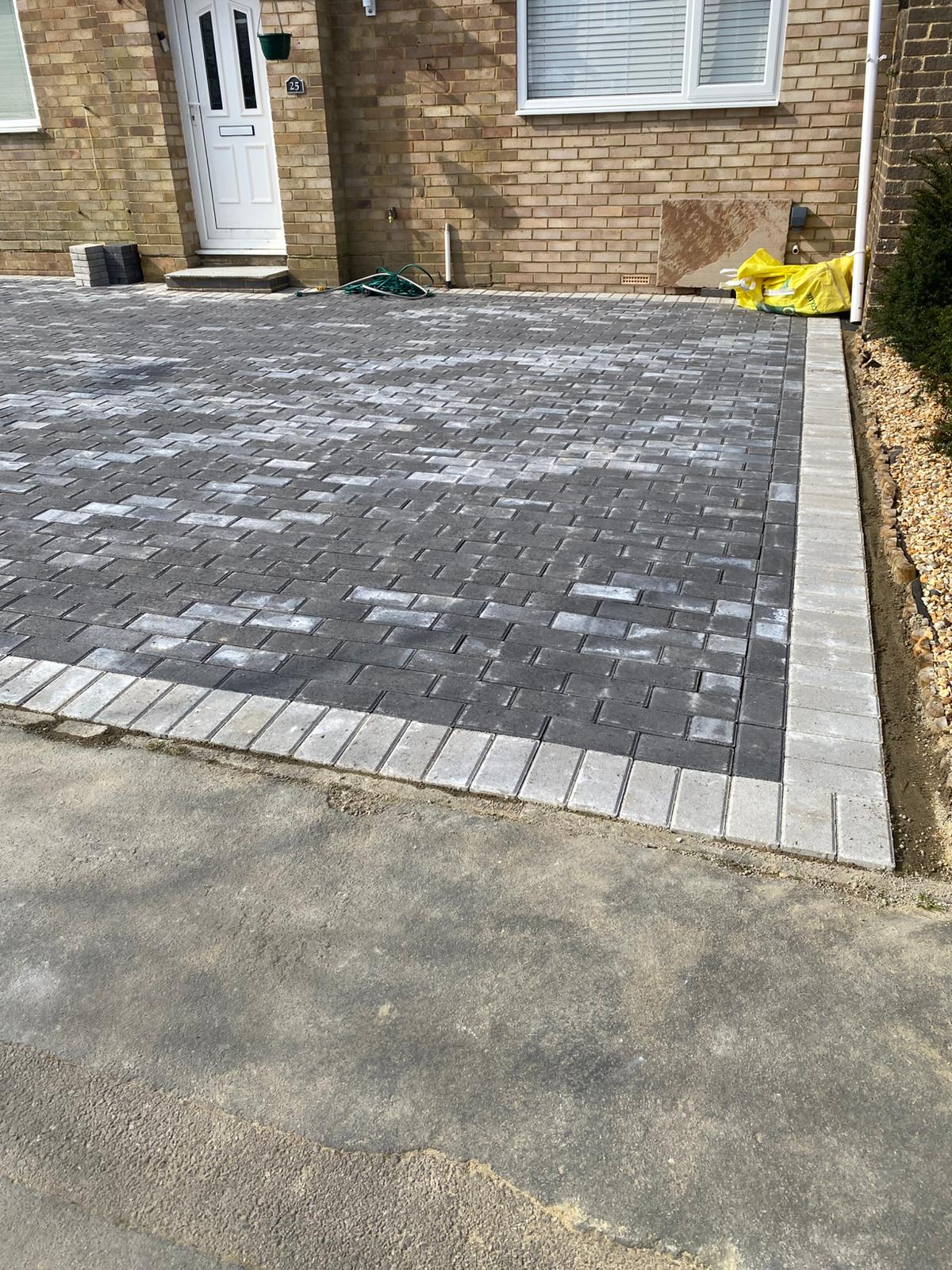
Block paving offers strong kerb appeal with borders, patterns and traditional detailing.
Block paving: pros and cons
Block paving is a traditional driveway choice and remains popular because of its flexibility, design options and classic appearance. Blocks can be laid in different patterns with borders and contrasting colours.
It suits many older homes, village properties and traditional driveways where a patterned finish looks more appropriate than a seamless resin surface.
Benefits of block paving
- Traditional, detailed appearance
- Wide choice of colours, blocks and patterns
- Individual blocks can often be replaced
- Good for borders and decorative detailing
- Can suit older or character properties
Things to consider
- Joints may need re-sanding over time
- Weeds can appear if maintenance is neglected
- Poor sub-base preparation can lead to sinking
- Colour and finish depend heavily on block choice
See our block paving service page for more information.
Cost: is resin cheaper than block paving?
Resin can be cheaper than block paving when installed as an overlay over a sound existing surface. This is because less excavation and rebuilding may be required. However, a full resin installation with excavation, new base, edgings and drainage can be similar to or sometimes more expensive than block paving.
Block paving costs vary heavily depending on the blocks chosen, the pattern, border detail and the amount of groundwork required. A simple block paving driveway with standard blocks will usually cost less than one using premium blocks, curves, borders and detailed cuts.
Resin overlay
Often the most cost-effective resin option where the existing surface is stable, clean and suitable.
Full resin installation
More expensive because it may include excavation, sub-base, edgings and drainage preparation.
Block paving
Price depends on block quality, design, border detail, drainage and preparation.
For more detailed price guidance, see our Driveway Cost Guide.
Maintenance comparison
Resin is usually easier to maintain because there are no block joints to re-sand and fewer spaces where weeds can establish. Regular sweeping and occasional washing are normally enough to keep it looking tidy.
Block paving can still last well, but it usually needs more maintenance. Joints may need re-sanding, weeds may need treatment and sunken blocks may need lifting and relaying if the sub-base moves.
Resin maintenance
- Sweep regularly
- Wash down when needed
- Keep drains and edges clear
- Avoid harsh chemicals and heavy point loads
Block paving maintenance
Block paving maintenance is usually simple but more regular. The key is keeping joints clean, managing weeds early and maintaining the kiln-dried sand between blocks.
Block paving maintenance
- Brush and wash regularly
- Treat weeds before they spread
- Re-sand joints when needed
- Lift and relay sunken areas if required
Drainage and planning considerations
Drainage should be considered before choosing any driveway surface. For front driveways, planning rules can apply where water runs onto the public footpath or highway. Both resin and block paving can be designed with permeable options, but only when the full system underneath is suitable.
Resin drainage
Resin bound surfacing can be permeable when installed over a suitable permeable base.
Block paving drainage
Block paving can be laid as a permeable system or designed with drainage channels and correct falls.
Planning rules
Planning permission may be needed if rainwater from a non-permeable driveway drains onto the highway.
Our upcoming Driveway Planning Permission Guide explains this in more detail.
Which surface suits your property?
Resin often suits modern homes, clean frontages and driveways where a smooth, low-maintenance appearance is wanted. Block paving often suits traditional homes, character properties and driveways where decorative borders or patterns are part of the desired finish.
Resin often suits:
- Modern homes
- Low-maintenance driveways
- Overlay projects where the existing base is suitable
- Clean, simple frontages
Block paving often suits:
- Traditional properties
- Decorative borders and patterns
- Driveways needing strong edge definition
- Homes where individual block replacement is useful
Not sure?
Send us photos of your current driveway and we can advise whether resin, block paving, tarmac or another surface is most suitable.
Request AdviceResin vs block paving: final verdict
Choose resin if you want a smooth, modern and generally lower-maintenance finish, especially where a suitable existing base allows a resin overlay. Choose block paving if you want a more traditional look with patterns, borders and individual blocks that can be replaced in future.
The most important factor is not just the surface — it is the preparation. A well-prepared driveway in either resin or block paving will usually outperform a poorly prepared driveway with a more expensive finish.
Resin vs block paving FAQs
Is resin better than block paving?
Resin is better if you want a smooth, modern and low-maintenance finish. Block paving is better if you want a more traditional appearance with patterns, borders and individual replaceable blocks.
Is resin cheaper than block paving?
Resin overlay can be cheaper where the existing base is suitable. A full resin installation may be similar to or more expensive than block paving depending on groundwork and drainage.
Which lasts longer?
Both can last well when installed properly. Longevity depends mainly on base preparation, drainage, usage and maintenance.
Which is lower maintenance?
Resin is usually lower maintenance because it has no block joints to re-sand and fewer places for weeds to establish.
Can resin go over block paving?
Resin is not normally installed directly over loose or moving block paving. The base must be stable and suitable, so a proper inspection is needed.
Which is better for drainage?
Both can be designed for good drainage. Resin bound can be permeable with the right base, while block paving can be installed as a permeable system or with drainage channels.
Need help choosing resin or block paving?
Call freephone or send driveway photos on WhatsApp for practical advice.
Compare preparation as well as appearance
Use our resin driveway cost guide to understand overlay and full-installation pricing, and review the driveway drainage guide before comparing final surfaces.