
Driveway Drainage Guide

Good driveway drainage protects the surface, the base, nearby buildings and the public pavement. This guide explains falls, channels, permeable construction and soakaways in straightforward terms.

  • Surface water routes explained
  • Permeable and channel-drained options
  • Levels checked during the site visit
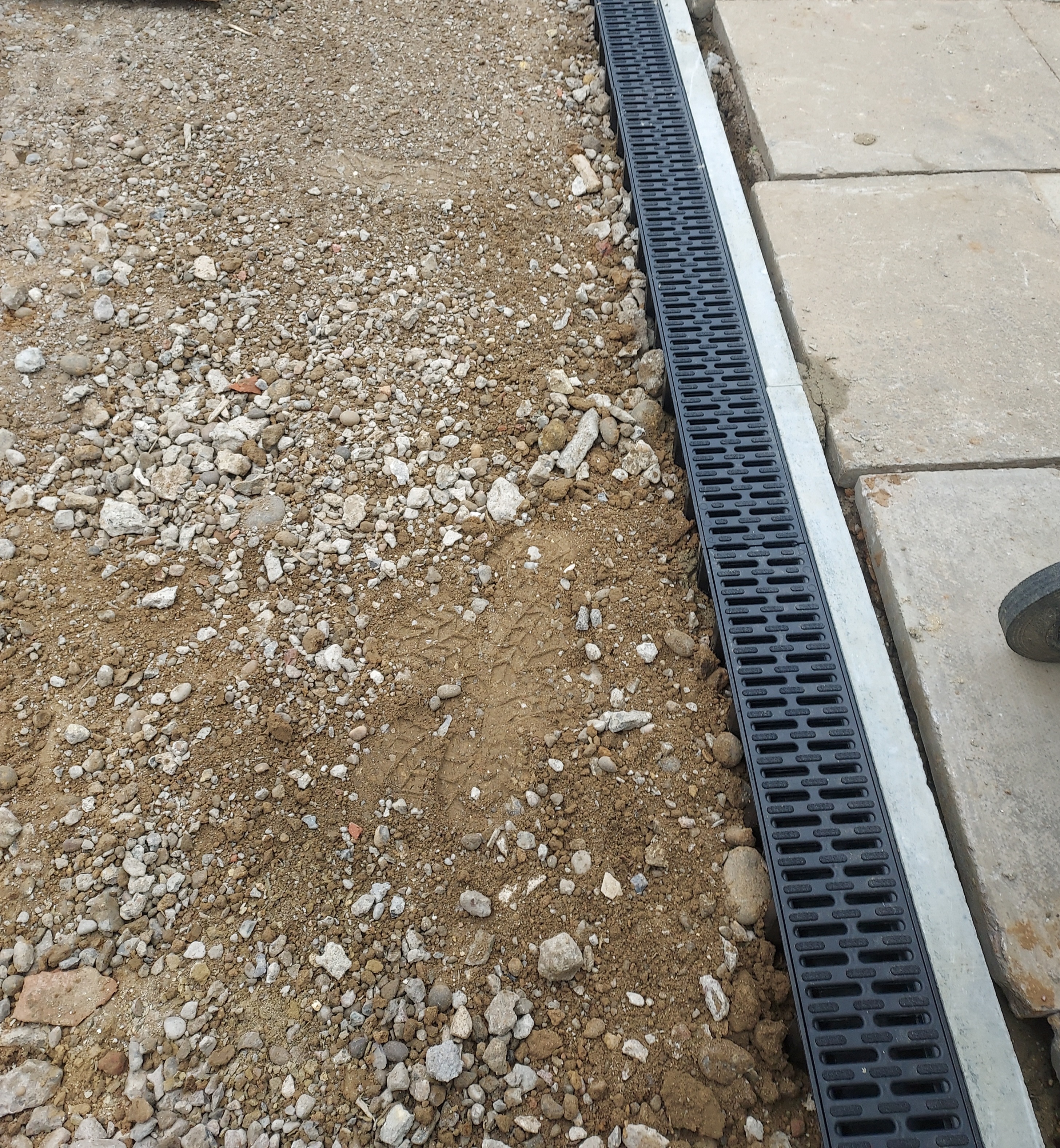
Driveway kerb and drainage detail

Why driveway drainage matters

Water should not be trapped against the house, garage or boundary, and a driveway should not simply discharge uncontrolled water onto the pavement or road. Persistent standing water can stain the surface, encourage algae, weaken joints and expose problems in the construction beneath.

Drainage needs to be planned before excavation and surfacing. The finished levels, thresholds, neighbouring ground and available discharge points all affect the right solution.

Common driveway drainage options

Permeable driveway construction

A correctly designed permeable system allows water to pass through the surface and suitable underlying layers. The complete construction must be designed for infiltration; a permeable finish alone does not correct an unsuitable base.

Drainage channels

Linear channels can intercept water near garages, thresholds or the bottom of slopes. They must lead to a suitable on-property drainage point and be installed at workable levels.

Soakaways

A soakaway can receive driveway water where ground conditions, space and separation from buildings allow. Suitability depends on soil, site layout and local conditions.

Falls to landscaped ground

Where appropriate, levels can direct water toward a lawn, border or other permeable area within the property rather than onto the highway.

What we check during a driveway survey

House and garage thresholds

Finished surfacing must relate safely to doors, damp-proof levels and garage entrances.

Existing falls

We identify where water currently travels and whether low spots or reverse falls are causing ponding.

Ground conditions

Soil and existing construction influence whether infiltration or a different drainage approach is appropriate.

Driveway gradient

Steeper drives may need channels or other measures to control the speed and direction of runoff.

Boundaries and neighbours

A new surface should not redirect water toward adjoining properties or create a boundary problem.

Existing drainage

Visible gullies, channels and soakaways are assessed before deciding whether they can remain or require attention.

Drainage and surface choice

Resin bound surfacing can form part of a permeable system when the full build-up is suitable. Permeable block paving uses specifically designed blocks and sub-base construction. Tarmac and conventional paving commonly rely on planned falls, channels or on-property discharge.

The correct choice depends on appearance, vehicle use, maintenance expectations, ground conditions and the route available for surface water.

Planning considerations

Rules can depend on the area being surfaced and how water is managed. Read our driveway planning permission guide and confirm project-specific requirements with the relevant authority where necessary.

Warning signs of poor driveway drainage

  • Puddles remaining long after rainfall
  • Water flowing toward the house or garage
  • Runoff crossing the pavement
  • Algae or persistent staining in low areas
  • Sunken channels, loose edges or washed-out joints
  • Water collecting beside retaining walls or steps

Plan the drainage before choosing the finish

We can inspect the existing driveway, measure the levels and explain suitable surfacing and drainage options before providing a written quotation.

Request a Free In-Person Quote