How much does a new driveway cost?
Most driveway prices depend less on the final surface and more on what is underneath. A small driveway with poor drainage, weak ground or restricted access can cost more per square metre than a larger driveway with a sound base and straightforward access.
The figures below are guide prices only. They are designed to help homeowners understand typical cost ranges before arranging a site visit. A proper quotation should always check ground condition, existing surface, drainage, levels, edgings and how the driveway will be used.
Quick guide prices
- Resin overlay: typically from £40–£70 per m² where the existing surface is suitable.
- Resin full installation: typically £90–£140+ per m² depending on groundwork.
- Block paving: typically £90–£160+ per m² depending on blocks, borders and preparation.
- Tarmac: typically £70–£130+ per m² depending on base and specification.
- Tar and chip: typically £20–£50+ per m² on larger suitable areas.
- Gravel: typically £40–£90+ per m² depending on depth, grids and edging.
Need an accurate price?
Send photos of your driveway on WhatsApp and we can usually give quick initial guidance before arranging a site visit.
Freephone: 0800 861 1678
WhatsApp: 07534 377 561
Driveway cost comparison table
| Surface | Typical guide price | Best suited for |
|---|---|---|
| Resin overlay | From £40–£70 per m² | Refreshing sound tarmac or concrete |
| Resin full install | £90–£140+ per m² | Smart, low-maintenance front driveways |
| Block paving | £90–£160+ per m² | Decorative driveways with borders and patterns |
| Tarmac | £70–£130+ per m² | Practical driveways, access roads and larger areas |
| Tar and chip | £20–£50+ per m² | Long rural drives, private lanes and estate entrances |
| Gravel | £40–£90+ per m² | Budget-friendly rural or informal driveways |
These are guide prices only. Final costs depend on survey, preparation, drainage, access and material choice.
Resin driveway costs
Resin bound driveways are popular because they look clean, modern and are relatively low maintenance. The biggest price difference is between a resin overlay and a full resin driveway installation.
A resin overlay can be more cost-effective where the existing tarmac or concrete is sound, stable and has sensible falls. If the base is cracked, moving, holding water or breaking up, a full installation is usually the better long-term option.
Typical resin cost factors
- Overlay versus full dig-out and rebuild
- Existing surface stability
- Edgings, borders and transitions
- Drainage requirements
- Stone blend and finish
- Access and driveway shape
Learn more about our resin driveway installation and resin overlay options.
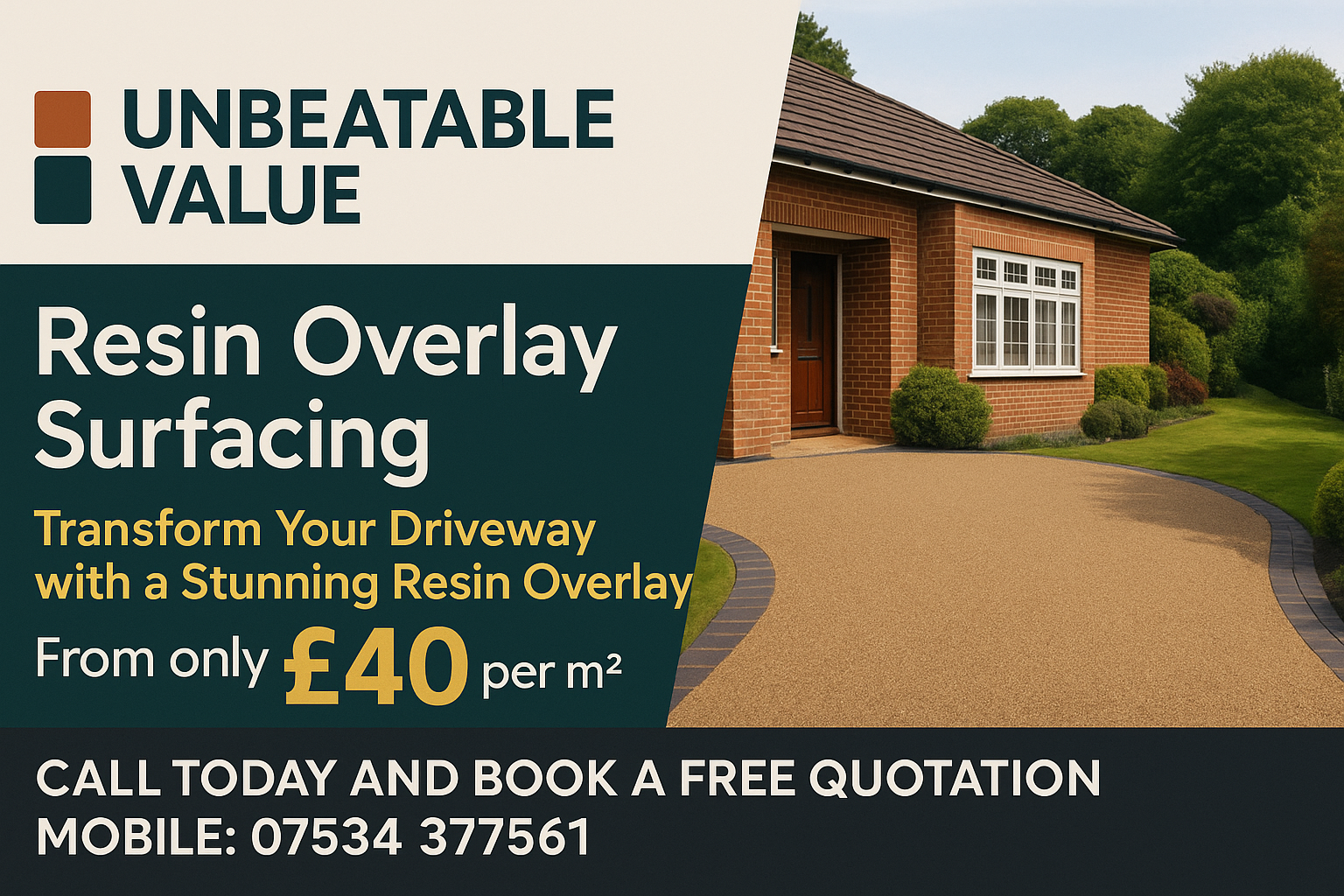
Resin overlay can reduce cost where the existing surface is suitable.
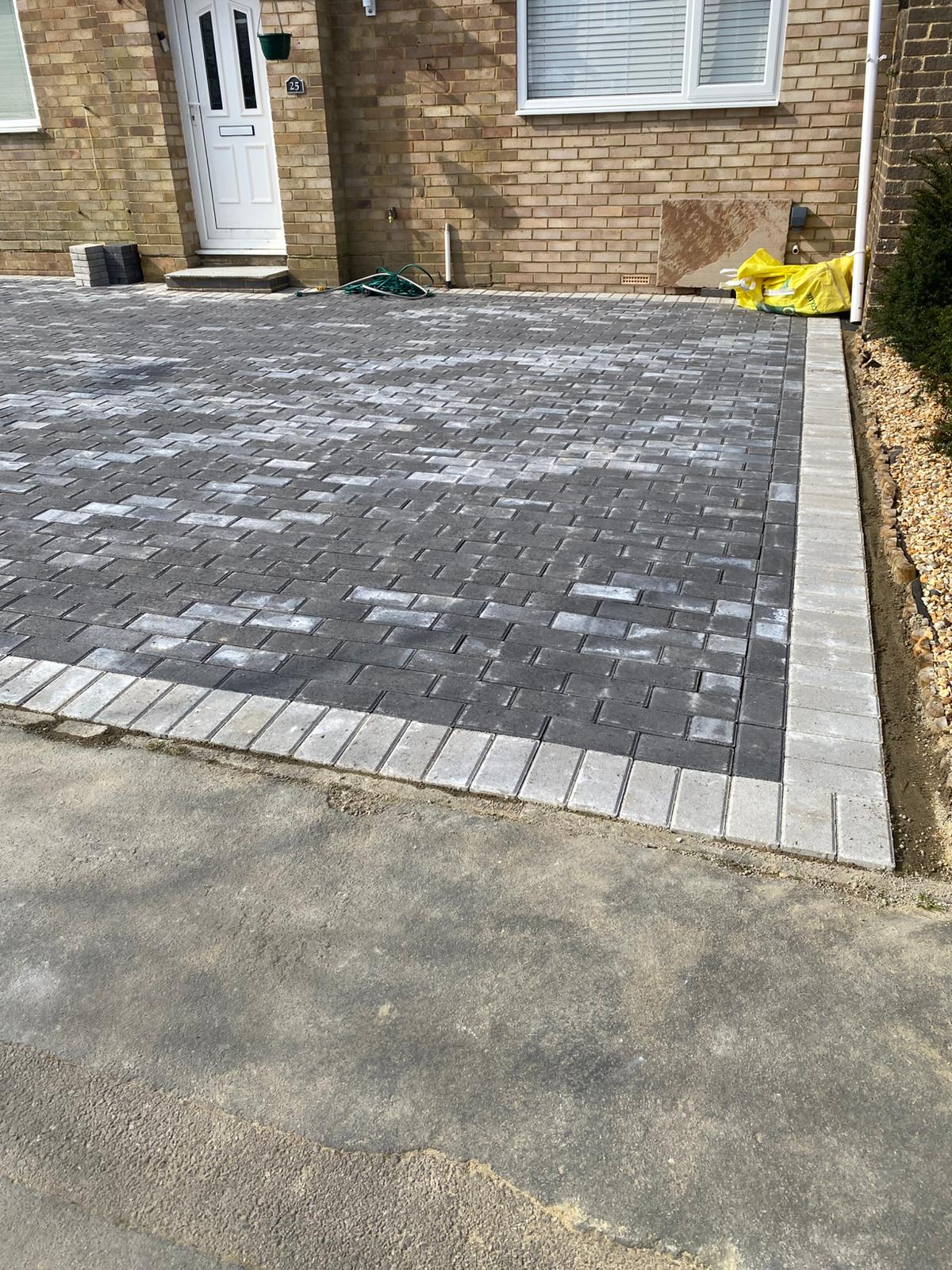
Block paving cost depends heavily on block choice, borders, patterns and preparation.
Block paving driveway costs
Block paving is a highly popular driveway choice because it gives a detailed, decorative finish with many colour, border and laying pattern options. It can suit both traditional and modern homes.
Costs vary depending on the quality of the blocks, the depth of excavation, sub-base preparation, edging detail, drainage and whether decorative borders or patterns are included.
What affects block paving price?
- Standard blocks versus premium blocks
- Herringbone, stretcher bond or decorative patterns
- Contrasting borders and kerbs
- Excavation and sub-base depth
- Drainage channels and soakaway requirements
- Shape, cuts and access
See our block paving driveway service page for more information.
Tarmac driveway costs
Tarmac is a practical, hard-wearing driveway surface that suits domestic driveways, larger parking areas and access routes. It is often chosen where the priority is a strong, clean, usable surface.
A tarmac overlay may be possible over a suitable existing base, but if the current driveway is cracked, uneven, soft or poorly drained, preparation and reconstruction will affect the final cost.
Tarmac price factors
- Overlay versus full construction
- Base depth and sub-base condition
- Drainage and falls
- Edging restraint
- Access for machinery
- Size of the driveway or access road
More details are available on our tarmac driveways page.
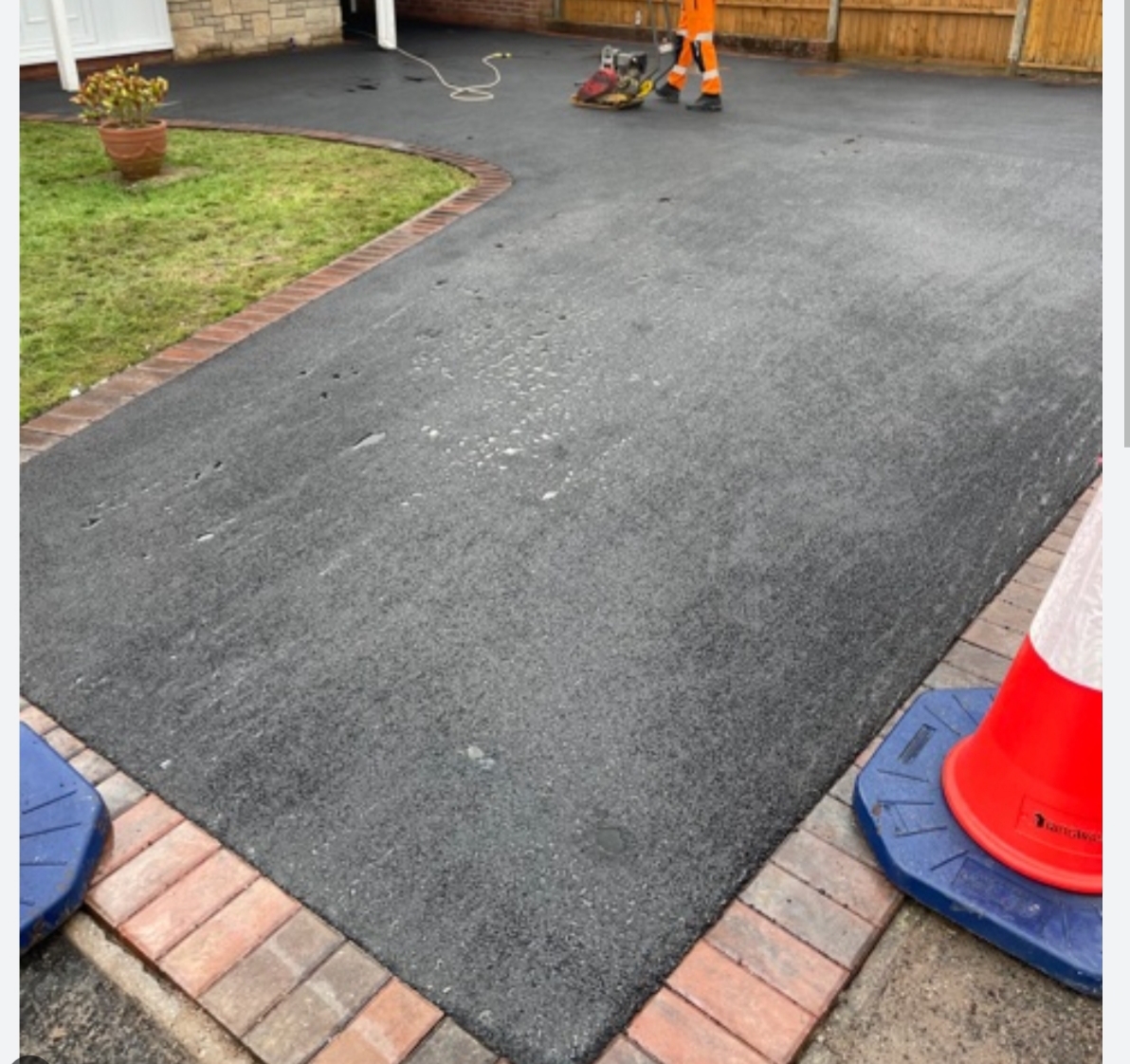
Tarmac is often chosen for practical driveways and larger parking areas.
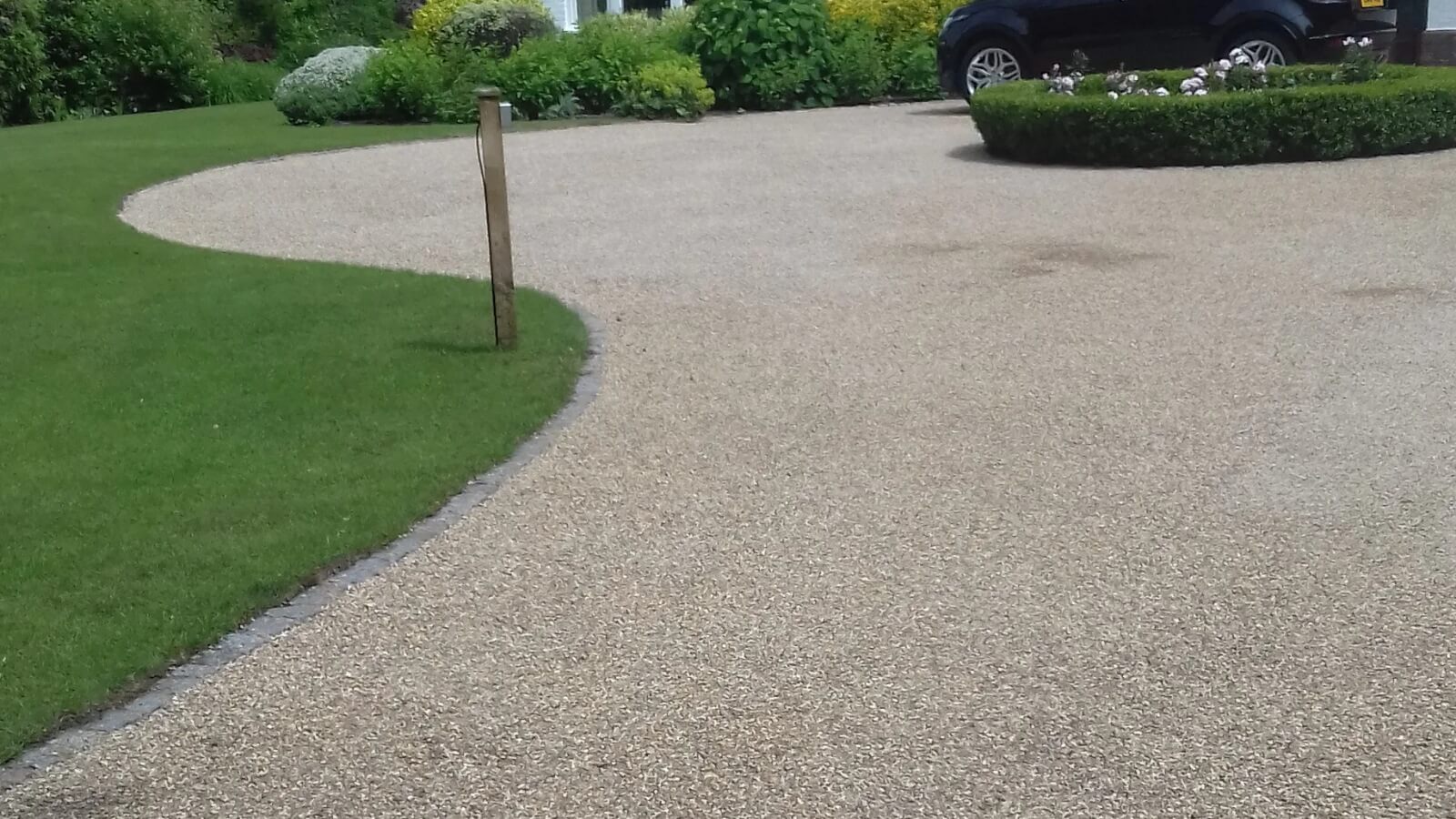
Tar and chip can be cost-effective for larger rural driveways and private lanes.
Tar and chip driveway costs
Tar and chip, also called surface dressing, is commonly used for longer driveways, private lanes, estate entrances, farm tracks and rural access routes. It gives a natural stone finish and can be more economical over larger suitable areas.
Cost depends on existing surface condition, preparation, traffic level, whether single or double dressing is required, and the chosen system or stone finish.
Tar and chip cost factors
- Existing surface condition
- Repair work before dressing
- Single dressing versus double dressing
- VLS or K170 system suitability
- Stone type and chipping size
- Driveway size, access and turning areas
View our tar and chip driveway page for more detail.
Gravel driveway costs
Gravel can be one of the more affordable driveway surfaces, particularly for rural properties or informal parking areas. It can look attractive and natural, but it does need proper preparation to prevent rutting, sinking and excessive movement.
Gravel costs increase when edging, membranes, stabilisation grids, deeper excavation or drainage improvements are needed.
Gravel cost factors
- Depth of excavation and sub-base
- Weed membrane
- Gravel stabilisation grids
- Edging or kerbs
- Stone type and depth
- Drainage and access
Cheapest surface isn’t always cheapest long-term
The lowest starting price is not always the best value. A poorly prepared driveway can fail quickly, collect water, become difficult to use or need expensive repairs later.
A proper site visit helps compare the real cost of each option based on your driveway, not just a generic square metre price.
What affects driveway costs most?
These are the main reasons one driveway quote can differ from another, even for the same surface type.
Ground condition
Soft ground, clay, tree roots, unstable old surfaces and poor sub-base can all increase preparation work.
Drainage
Driveways often need falls, channels, soakaways or permeable surfaces to manage rainwater correctly.
Existing surface
A sound surface may allow overlay. A failed surface often needs excavation, disposal and reconstruction.
Edgings
Kerbs, block borders and restraint edges improve appearance and help the driveway perform correctly.
Access
Restricted access can slow work down and affect labour, disposal and material handling.
Driveway shape
Curves, slopes, tight corners, steps and thresholds require more detailing than a simple square area.
Do driveway prices include drainage?
Not always. Drainage is one of the most important details to check in any driveway quotation. If water flows toward the house, garage, public footpath or neighbouring property, the driveway may need drainage channels, soakaways or a permeable design.
Resin bound surfaces can be permeable when installed as part of a suitable system. Block paving can also be designed with permeable construction. Tarmac and concrete-style surfaces usually need correct falls and drainage channels where water cannot naturally run off safely.
Planning and drainage
For front driveways, planning rules can apply where non-permeable surfaces direct water onto the road or public footpath.
See our upcoming planning guide for a full explanation of driveway drainage and permission rules.
Example driveway price scenarios
Small front driveway
A compact front driveway may cost more per square metre because fixed labour, preparation and access costs are spread over a smaller area.
Medium family driveway
A typical two to three car driveway usually depends on whether the existing base can be reused or needs rebuilding.
Large rural driveway
Larger areas can sometimes reduce the average cost per square metre, especially with tarmac or tar and chip where access is good.
All figures on this page are guide prices only. A site visit is required for a fixed written quotation.
Choosing the best value driveway surface
The best value driveway is not always the cheapest installation. A surface should suit the property, the way the driveway is used, the ground conditions and the amount of maintenance you are willing to do.
- Choose resin for a clean, modern, low-maintenance finish.
- Choose block paving for decorative detail, borders and traditional kerb appeal.
- Choose tarmac for a practical, hard-wearing surface.
- Choose tar and chip for long rural drives and natural-looking access routes.
- Choose gravel for a more informal, cost-conscious rural surface.
Related driveway services
Driveway cost FAQs
How much does a driveway cost in Kent, Surrey or Sussex?
Costs vary by surface, size, preparation and drainage. As a guide, resin overlays may start from around £40–£70 per m² where suitable, while full installations and block paving usually cost more due to excavation, sub-base and edging work.
Is resin cheaper than block paving?
Resin overlay can be cheaper than block paving where the existing base is suitable. A full resin installation can be similar to or sometimes higher than block paving depending on preparation and detailing.
Is tar and chip cheaper than resin?
On larger suitable areas, tar and chip is often more economical than resin. It is especially useful for long rural driveways, private lanes and access routes.
Can my existing driveway be overlaid?
Sometimes. Overlay depends on the existing surface being stable, well-drained and free from major movement. Cracked, sinking or water-holding surfaces usually need repair or reconstruction first.
What is the cheapest driveway surface?
Gravel is often one of the cheapest starting options, while tar and chip can be cost-effective on larger suitable areas. The cheapest long-term option depends on ground condition, drainage and maintenance expectations.
Do I need planning permission for a new driveway?
It depends on drainage, surface permeability and where water is directed. Front driveways may need permission if a non-permeable surface sends water onto the road or public footpath.
Why do driveway quotes vary so much?
Quotes vary because preparation levels vary. One contractor may price a simple overlay, while another may include excavation, sub-base, drainage, edgings and proper waste removal.
Get a clear driveway quotation
Call freephone or send driveway photos on WhatsApp for practical guidance and a site visit.
More detailed cost and preparation advice
See the dedicated resin driveway cost guide and learn why driveway drainage can affect preparation and quotation costs.